
Basement Monsoon Flood Cleanup in Arizona: Storm & Flash Flood Cleanup
Basement monsoon flood cleanup is the work this company was shaped around. Every summer the same thing happens somewhere in Arizona: the sky goes brown, the wind comes up, and forty minutes later a street is running curb to curb and somebody's basement stairwell has become a drain. MH Restoration handles storm-flooded basement cleanup from Mesa across the state, and monsoon water needs a different approach from a plumbing leak.
Short answer
Monsoon floodwater is contaminated runoff. It's pumped out, the mud is removed, porous materials it soaked are cut out, hard surfaces are sanitized and the structure is dried to measured targets. A standard homeowners policy doesn't cover it; flood insurance does, within limits.
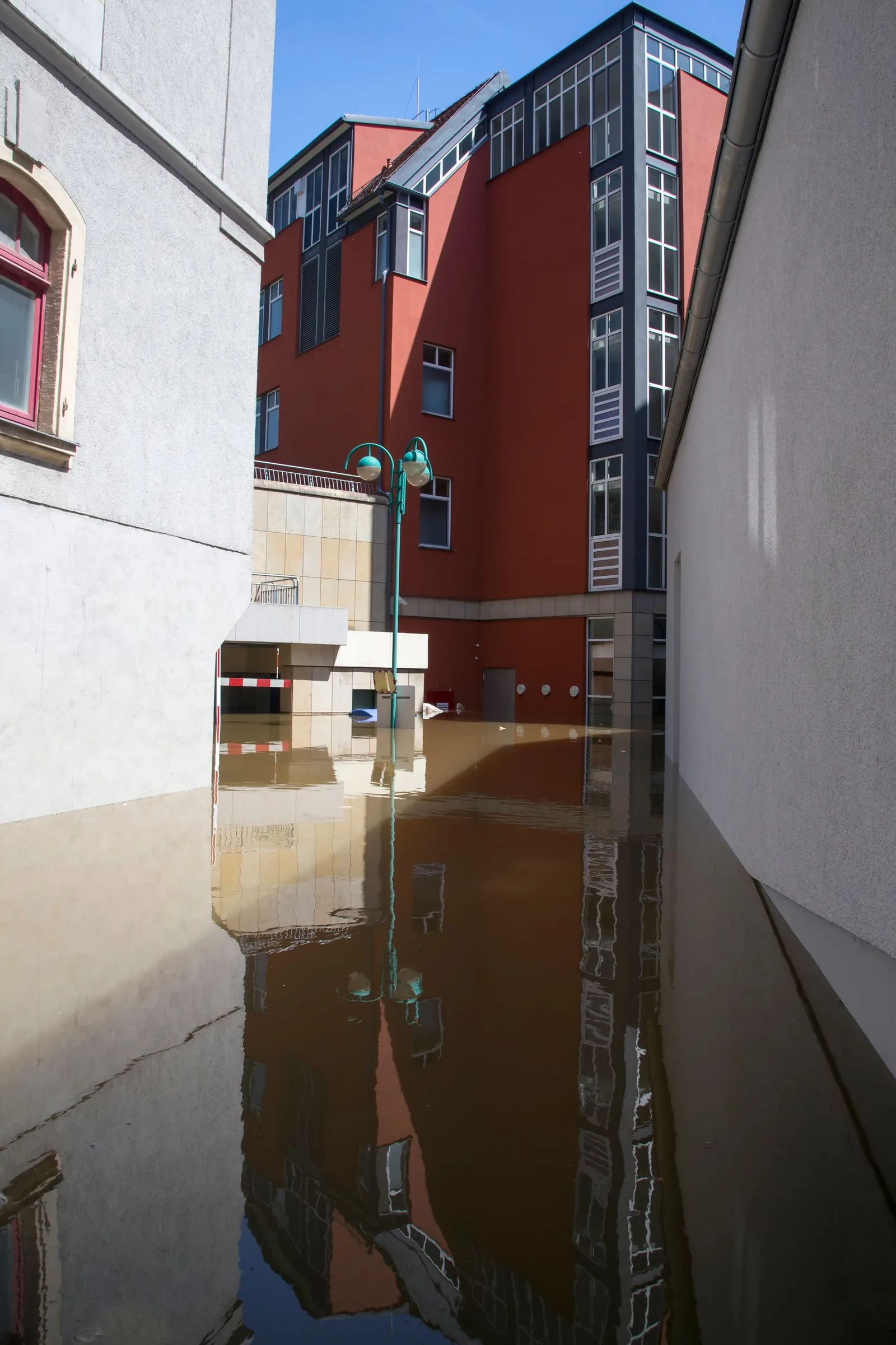
Why Does a Desert Flood?
Because the rain comes all at once and the ground won't take it. The National Weather Service sets the monsoon season as June 15 through September 30. Phoenix averages roughly seven inches of rain in an entire year and Tucson a few inches more, with a large share landing in those three and a half months. A single cell can deliver an inch in thirty minutes over one neighborhood while the next one over stays dry.
The ground makes it worse. Soil that's been baking at 110 degrees for weeks has a crust that sheds water. Under it, across much of the state, sits caliche. So the rain runs: off roofs, down driveways, along block walls, into retention basins and washes. Anything below grade on its route fills up. That's flash flooding, and it doesn't need a river or a flood zone to happen.
How Monsoon Water Gets Into a Basement
| Entry point | What happens | More detail |
|---|---|---|
| Window wells | Fill past the sill and pour through the frame | Window well flood cleanup |
| Exterior stairwells and walk-out doors | Area drain clogs with dust and leaves; water comes under the door | This page |
| Foundation walls and floor joint | Saturated soil pushes water through cracks and the cove joint | Water intrusion cleanup |
| Floor drains and basement bathrooms | Storm-loaded sewers back up at the lowest fixture | Sewage backup cleanup |
| Sump or ejector pit | Power outage stops the pump mid-storm | Sump pump failure cleanup |
| Garage | Driveway slopes toward the house; water crosses the slab | Garage flood cleanup |
Is Monsoon Floodwater Dangerous?
Treat it that way. By the time runoff reaches your basement it's crossed streets with oil on them, yards with fertilizer and pet waste, alleys, and in older areas septic leach fields. In a heavy storm, sewers can overflow into it. The IICRC S500 standard puts water like this in Category 3, the same class as sewage.
In practical terms: don't wade in it barefoot or with open cuts, keep kids and pets out, and don't try to save carpet, pad or upholstered furniture it soaked.
How Storm-Flooded Basement Cleanup Works
- Safety
Power off to the level, gas checked, structure looked over. After a major flow we check that walls and stairs are sound before working under them. - Basement storm water extraction
Trash pumps that pass silt and small debris bring the level down; extractors finish the floor. See basement water removal. - Muck-out
Mud, gravel and wrecked contents are shoveled, bagged and hauled. See debris and mud cleanup. - Controlled demolition
Carpet, pad, drywall and insulation below the water line are cut out. The cut goes above the highest wet reading, not just the visible line. - Wash and sanitize
Slab, block and framing are rinsed until clean, then treated with an EPA-registered antimicrobial. - Structural drying
During monsoon the outdoor air is humid, so the basement is closed up and dried with dehumidifiers. Opening windows would slow it down. See basement drying. - Verification
Final moisture readings are compared with the dry standard and handed to you before any rebuild starts.
How Storms Differ Around the State
Phoenix and the East Valley
Short, violent cells, often arriving behind a wall of dust. Flat lots, block walls that channel flow, retention basins that overtop. Basement homes in Mesa, Gilbert, Chandler and Tempe mostly flood through window wells and stairwells.
Scottsdale, Paradise Valley and the foothills
Hillside lots and natural washes. Water arrives with speed and carries rock. Lower levels cut into a slope take it against the uphill wall.
Tucson
More monsoon rain than Phoenix, and mountains on three sides. Sheet flow comes off the Catalina and Rincon foothills toward the Rillito, Pantano and Santa Cruz. Dip crossings and street flooding are routine.
Flagstaff and the Rim
Summer storms over wildfire burn scars. Burned slopes shed water and ash many times faster than healthy forest, and neighborhoods below the Schultz, Museum and Pipeline fire scars have flooded repeatedly since 2010.
Sedona and the Verde Valley
Oak Creek and the Verde River rise quickly after storms upstream, sometimes under a clear sky locally.
Does Insurance Cover Monsoon Flooding in a Basement?
A standard homeowners policy does not. Arizona's Department of Insurance and Financial Institutions says so directly: flood damage from rising or surface water requires separate flood insurance. Three more things to know:
- NFIP basement limits. A federal flood policy generally covers the foundation, utilities and equipment such as the furnace and water heater, plus cleanup. It generally does not cover finished basement walls, flooring or most belongings.
- The 30-day wait. New NFIP policies usually take 30 days to become effective.
- Flood zones aren't the whole story. Homes outside mapped high-risk zones flood in monsoon storms regularly, and policies for those homes typically cost less.
Wind-driven rain through a damaged roof or broken window is a different cause and is often covered by the homeowners policy. If your loss has both, document them separately. We wrote more in flooding outside a FEMA flood zone.
What Does Monsoon Flood Cleanup Cost?
Basement flood projects in Arizona generally run $3,000 to $12,000, and storm jobs sit in the upper part of that because they involve contaminated water, mud, material removal and disposal on top of drying. A severe flood through a large finished basement can go beyond it. We scope from the moisture map and put it in writing before work continues past the emergency stage.
Storm water in the basement?
Power off, stay out of it, call.
(800) 231-6861Answered through every monsoon night.
Monsoon Flood Cleanup FAQs
When is monsoon season in Arizona?
The National Weather Service defines it as June 15 through September 30. The heaviest storms in most of the state typically fall in July and August.
Can my basement flood if I am not in a flood zone?
Yes. Flood maps model rivers and major washes, not a local cloudburst overwhelming streets and yards. Many monsoon basement floods happen outside mapped high-risk zones.
Can carpet be saved after monsoon flooding?
No. Runoff is Category 3 water. Carpet, pad and other porous materials it soaked are removed because they cannot be reliably decontaminated.
Should I open the windows to dry the basement after a storm?
Not during monsoon season. Outdoor humidity is high after storms, so closing the space and running dehumidifiers dries it faster.
How soon after a storm should cleanup start?
The same day if possible. Contaminated water and mud do more damage with each hour, and the 24 to 48 hour window for limiting mold starts when the water arrives.
Do you handle cleanup after flooding below a wildfire burn scar?
Yes. Post-fire flooding carries ash and heavy sediment. The process is the same as other storm jobs with more muck-out work before drying can begin.
References
- National Weather Service, North American Monsoon and Arizona monsoon season dates
- ANSI/IICRC S500 Standard for Professional Water Damage Restoration
- Arizona Department of Insurance and Financial Institutions, flood insurance consumer information
- FEMA National Flood Insurance Program, basement coverage and waiting period