
Basement Water Heater Flood Cleanup in Arizona
Basement water heater flood cleanup starts with a fact most people learn the hard way: a failed tank doesn't leak forty gallons and stop. It leaks forty gallons and then keeps leaking, because the cold supply keeps refilling it. Until someone closes that valve, the basement is being fed by the city. MH Restoration cleans up water heater floods in basements and utility rooms across Arizona.
Tank leaking now?
Close the cold-water valve on the pipe above the heater (or the house main). For a gas unit turn the gas control to OFF; for electric, switch off its breaker. Don't wade to the heater if outlets or cords are under water.
Why Water Heaters Fail So Often in Arizona
Hard water. Much of Arizona's supply, from the Salt and Colorado Rivers and from groundwater, carries a heavy mineral load. Heating that water drops the minerals out as scale, and scale settles at the bottom of the tank. Over the years it insulates the burner from the water, overheats the steel underneath and eats through the lining. Tanks here often don't last as long as the number printed on the label suggests.
Signs a tank is on its way out:
- rumbling or popping when it heats (that's steam bubbling through sediment);
- rust-tinted hot water;
- moisture or rust streaks around the base or fittings;
- a relief valve that drips;
- age past about ten years with no flushing history.
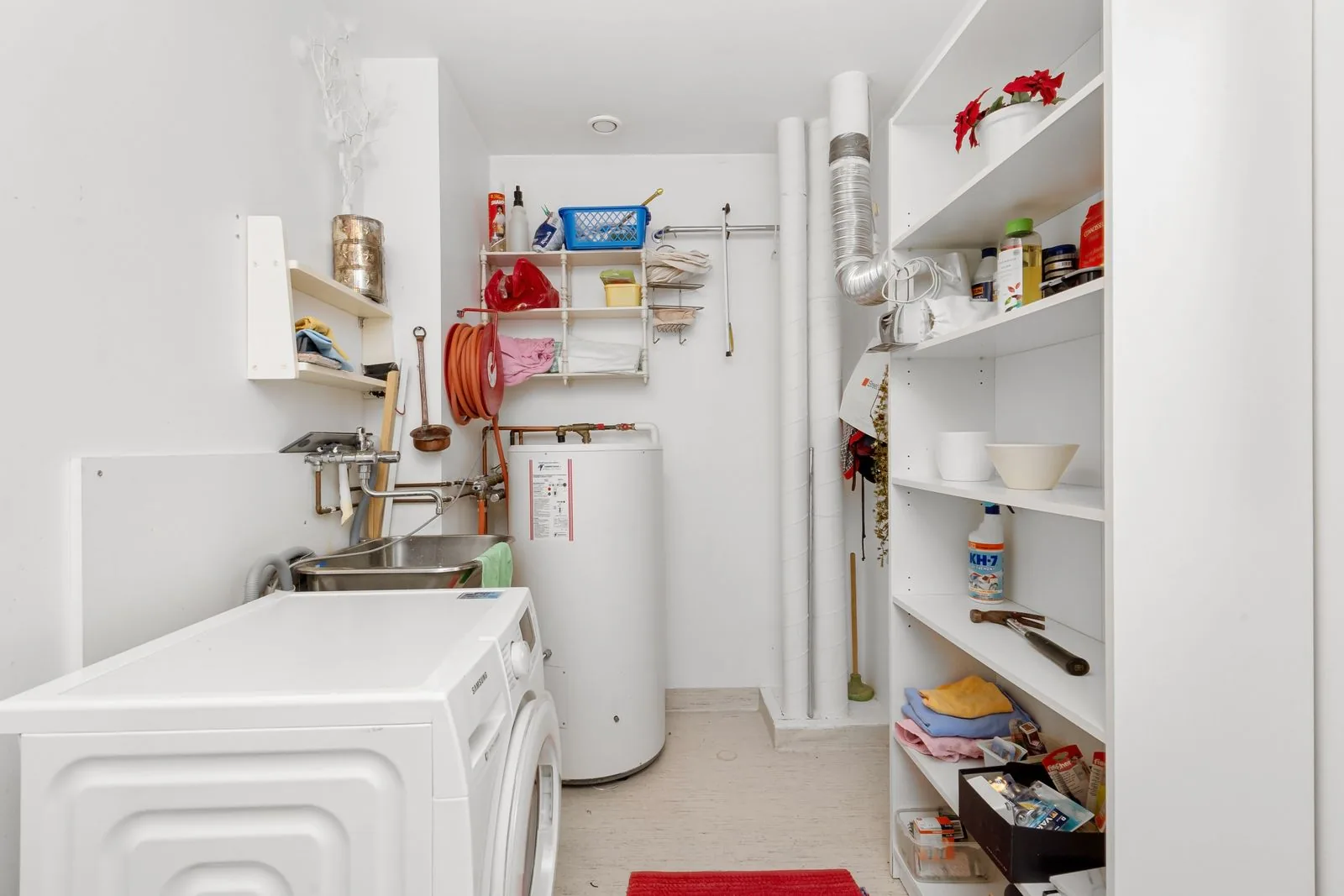
Most Arizona homes keep the water heater in the garage. Homes with basements often put it downstairs in a utility room, next to the furnace and sometimes on the other side of a wall from a finished family room. That's the scenario this page is about.
How Much Water Are We Talking About?
More than the tank holds. A residential tank is typically 40 to 50 gallons, sometimes 75. But with the supply open, a tank with a split seam passes water continuously. A failure at 9 a.m. on a workday can put several hundred gallons on the floor by dinner. It runs under the utility room wall, into the carpet pad next door and along the bottom plates.
Water Heater Leak Cleanup: The Process
- Isolate the heater
Water off, fuel or power off. If the tank is still holding water it's drained to a floor drain or pumped outside. - Extract
Standing water comes off the slab; carpet and pad in adjoining rooms are extracted. See basement water removal. - Map it
Meters follow the water under walls and into neighboring rooms. Utility room walls are often unfinished on one side, which makes inspection quick. - Clean
Tank sediment leaves a gritty, rust-colored film. The slab is washed and extracted. - Dry
Air movers and dehumidifiers run on the slab, the bottom plates and any wet drywall, with daily readings. Hot water evaporates faster and pushes humidity up quickly, so dehumidification matters from the first hour. - Check the neighbors
The furnace and any appliances that sat in water should be looked at by a qualified technician before they're run again.
Is Water Heater Water Clean?
Mostly. It starts as Category 1, the same potable water that feeds your taps, with rust and mineral sediment in it. That's dirty-looking but not a health hazard the way sewage is. Carpet and drywall can usually be dried and kept when the leak is caught the same day.
Two things change that. Time: clean water in contact with building materials for more than a couple of days is treated as contaminated. And what else is in the room: if the flood reached a floor drain that backed up, or an ejector pit, the category goes up.
What About the Furnace and the Gas Line?
Take these seriously. A gas water heater or furnace whose burner, controls or gas valve were under water should not be relit until a licensed technician has inspected it. Manufacturers generally call for replacing gas valves and controls that have been submerged. If you smell gas at any point, leave and call Southwest Gas or 911 from outside.
Will Insurance Cover a Water Heater Flood?
Often, yes. A tank that fails suddenly is the kind of accidental discharge a standard homeowners policy is written for, and the resulting water damage is commonly covered. The usual exceptions:
- The heater itself. Policies generally pay for the damage it caused, not for a new water heater.
- Long-term leaking. If the adjuster sees rot, layered staining or old mold, the claim may be treated as gradual damage.
Take photos of the tank, its data plate and the failure point before the plumber hauls it off.
What Does Water Heater Flood Cleanup Cost?
Basement flood projects in Arizona generally run $3,000 to $12,000. A water heater failure caught within hours, confined to a utility room with a bare slab, sits at the low end. One that ran all day into a carpeted, drywalled basement lands higher, and reconstruction of finishes is a separate scope from the drying.
Keeping It From Happening Again
- Have the new tank set in a drain pan piped to a floor drain or to the outside.
- Add an automatic shutoff valve with a leak sensor at the base.
- Flush the tank once a year to clear sediment. In hard-water areas this is the single best habit.
- Have the anode rod checked every few years.
- Know where the cold shutoff is and make sure it turns.
- Consider a whole-house water softener or scale treatment if you're replacing tanks often.
Water Heater Flood Cleanup FAQs
What do I do if my water heater floods the basement?
Close the cold-water supply valve above the heater, shut off its gas or its breaker, and cut power to the wet area before entering. Then call for water extraction and drying.
Does homeowners insurance cover a water heater leak?
Sudden failures are commonly covered for the water damage they cause. The cost of the replacement heater is usually not covered, and long-term leaks may be excluded as gradual damage.
Can I relight a water heater or furnace that got wet?
Not until a licensed technician inspects it. Gas valves, burners and controls that were submerged typically need to be replaced before the appliance is safe to operate.
How long does it take to dry a basement after a water heater leak?
Three to five days of monitored drying is typical when the leak is found quickly. Leaks that ran for a day or more into finished rooms take longer.
How long do water heaters last in Arizona?
Hard water shortens tank life. Many tanks in Arizona fail at around ten years, sooner without regular flushing, so a unit past that age is worth inspecting.
References
- ANSI/IICRC S500 Standard for Professional Water Damage Restoration
- Arizona Department of Insurance and Financial Institutions, homeowners insurance consumer information
- Appliance manufacturer guidance on flood-damaged gas controls