
Basement Carpet & Flooring Water Damage in Arizona
Basement carpet water damage is the first thing homeowners ask us about, usually in the form of one question: can it be saved? Sometimes it can. The flooring in a flooded basement takes the water first and holds it longest, and the right call depends on the product, the kind of water and how long it sat. MH Restoration handles flooded basement carpet cleanup and wet flooring removal and drying across Arizona.
Short answer
Carpet wet with clean water for less than two days can usually be saved; the pad often can't. Laminate almost never survives. Vinyl plank survives but has to be lifted so the slab can dry. Hardwood is a maybe. Anything soaked by sewage or storm runoff comes out.
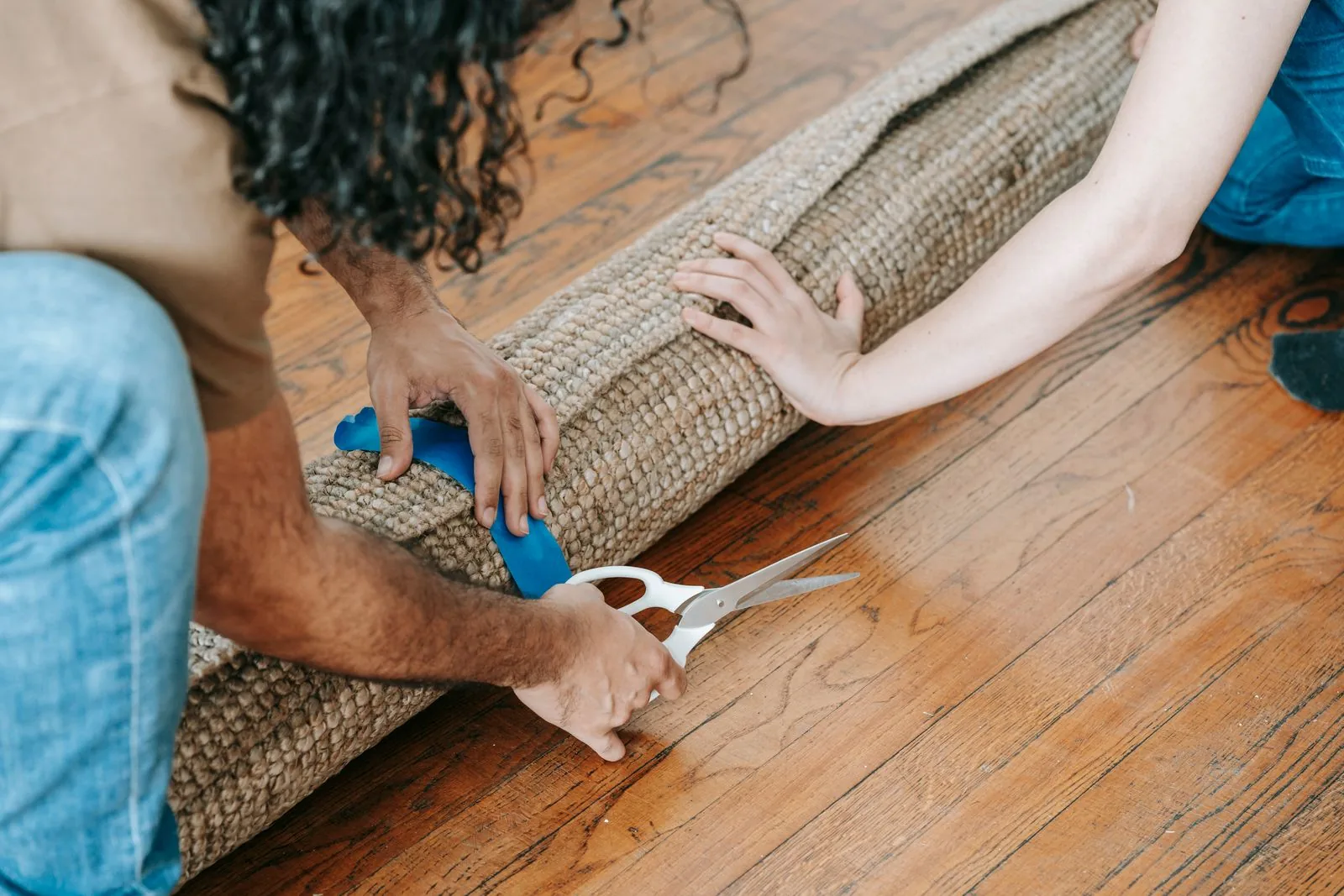
Can Flooded Basement Carpet Be Saved?
It can if three things are true: the water was clean, it's been wet under 48 hours or so, and the carpet itself hasn't started coming apart. Check all three before anyone tells you it's a total loss, or tells you it's fine.
| Situation | Carpet | Pad |
|---|---|---|
| Clean water (supply line, water heater), found the same day | Save: extract, dry, clean | Small area: dry in place. Large area: replace |
| Clean water, wet two to three days | Judgment call; check backing and odor | Replace |
| Gray water (washer discharge, sump overflow) | Often saved with hot-water extraction and antimicrobial | Replace |
| Sewage, monsoon runoff, any outside floodwater | Remove | Remove |
| Backing separating from the face (delamination) | Remove | Remove |
Why does the pad get thrown out when the carpet doesn't?
Pad is a sponge. Most of it is rebond foam, which soaks up several times its weight in water and gives it back slowly. It's also cheap, far cheaper than the equipment days it would take to dry it under a carpet. Replacing pad and saving carpet is usually the least expensive correct answer.
How Wet Basement Carpet Is Dried
- Extraction
A weighted extraction tool is run slowly over the carpet to press water up out of the fibers and pad. This single step removes far more water than days of fans. - Lift and inspect
Carpet is released from the tack strip along one or two walls so we can see the pad and the slab. Wet pad is cut out. - Treat the slab
The concrete is extracted, cleaned and, where the water wasn't clean, treated with an antimicrobial. - Float or lay flat
Air movers are set to blow under the carpet ("floating") or across it, with dehumidifiers running. Readings are taken daily. - Reinstall
Once slab and carpet read dry, new pad goes down, the carpet is re-stretched onto the tack strip and it's cleaned.
Tack strip that's been wet a while rusts and stains the carpet edge; it's inexpensive and we replace it when it's marked.
Hard Flooring: What Happens to Each Type
Basement flooring water damage depends heavily on what the floor is made of. Arizona basements see a lot of floating floors over concrete, and those behave differently from anything nailed to a wood subfloor.
| Flooring | How it reacts to water | What we usually do |
|---|---|---|
| Laminate | The fiberboard core swells at the seams within hours and doesn't shrink back | Remove and replace |
| Luxury vinyl plank or tile (LVP/LVT) | The plank is waterproof. Water gets through the seams and sits on the slab under it | Lift, dry the slab, relay if the locking edges are intact |
| Sheet vinyl | Traps water beneath it; adhesive lets go | Usually removed so the slab can dry |
| Engineered hardwood | Plies can separate; top layer may cup | Sometimes saved if caught very early; often replaced |
| Solid hardwood | Cups as the bottom absorbs moisture | Can be dried with floor mats over one to two weeks, then refinished |
| Ceramic or porcelain tile | Tile is unaffected; water can get under through grout and edges | Dry in place and check for hollow or loose tiles |
| Sealed or stained concrete | Absorbs water slowly, releases it slowly | Clean and dry in place |
What about water under the floor?
This is the one that catches people. A floating floor over concrete can look perfect on top while a sheet of water sits beneath it. There's no air movement down there, so it doesn't dry; it just stays wet against the slab and the underlayment. A non-invasive meter over the surface and a pulled plank at the edge tells us in a few minutes. If it's wet underneath, the floor has to come up.
Is the Slab Dry Enough for New Flooring?
Don't guess. Concrete that looks and feels dry can still be giving off enough moisture to ruin a new floor. Flooring manufacturers set moisture limits for the slab, and installers test for them, commonly with in-slab relative humidity probes or a calcium chloride test. Laying new laminate or glue-down vinyl over a slab that hasn't been tested is how people end up replacing a floor twice. We'll tell you when our readings say the slab has stabilized, and your flooring installer should run their own test before they start.
An Arizona Note on Older Floors
In homes built before the 1980s, old vinyl tile (especially nine-inch squares) and the black adhesive under it can contain asbestos. If we find that beneath a wet carpet in a historic-district Phoenix basement or an older Tucson home, we stop and have it tested before anything is scraped. Intact, it's usually left alone and floored over.
What Does Carpet and Flooring Water Damage Cost?
Flooring work is one part of a basement flood project, and those projects in Arizona typically run $3,000 to $12,000 all in. Saving carpet costs less than replacing it. Removing glued-down flooring costs more than lifting a floating one. Replacement flooring itself is a reconstruction cost and is quoted separately from the cleanup.
For a sudden plumbing leak, a homeowners policy commonly covers both the drying and the flooring replacement. For outside floodwater, an NFIP flood policy generally doesn't cover finished flooring in a basement at all. More on that split is on our basement flood cleanup page.
Wet carpet downstairs?
Tell us what kind of water and how long. That's most of the answer.
(800) 231-6861Carpet & Flooring Water Damage FAQs
Should flooded basement carpet be replaced?
Not always. Carpet soaked by clean water and extracted within about 48 hours can usually be dried, cleaned and reinstalled over new pad. Carpet soaked by sewage or storm runoff should be replaced.
How long can carpet stay wet before it is ruined?
Plan on 24 to 48 hours. After that, odor, backing separation and mold become likely, and clean water is treated as contaminated.
Can I dry wet carpet pad?
A small area wet with clean water can sometimes be dried in place. For larger areas, replacing the pad is faster and usually cheaper than the equipment time needed to dry it.
Is vinyl plank flooring ruined by a basement flood?
Usually not. The planks tolerate water, but they must be lifted so the concrete underneath can dry. If the locking edges are undamaged they can be laid again.
Why did my laminate floor swell after a small leak?
Laminate has a wood-fiber core that absorbs water at the seams and swells permanently. Even a small amount of water reaching the joints can cause raised edges that do not flatten when dry.
References
- ANSI/IICRC S500 Standard for Professional Water Damage Restoration
- Pacific Northwest National Laboratory, Building America flood recovery guidance on flooring
- U.S. EPA asbestos information for homeowners